Q2 2026
Why Eon exists
Eon's mission is to upload the brain — to map it in enough detail, and learn its function in enough depth, that we can run it as a living emulation. The end goal is the human mind; a mind need not end with the body that carried it.
Getting there is a ladder, not a leap. We prove the entire pipeline at one scale, then the next: the fly first (done, and published in Nature), the mouse next (the raise now open funds it), and the human after. Each species is roughly a thousandfold larger than the last, so every quarter's work is a rung — proving the accuracy and the cost that make the next scale credible.
Three workstreams run in parallel toward that: scan the brain at synapse resolution, learn how its wiring produces function, and emulate the result. The rest of this update reports how far each moved this quarter, and what it unlocks next.
Background · the plan, end to end
Scan. Image brain tissue at synapse resolution and reconstruct the full wiring diagram — the connectome. This is the raw map. We have now scanned more of it, at this resolution, than the rest of the world combined.
Function. A wiring diagram alone is not a mind; you have to know what the wiring does. So we learn to predict a neuron's activity from structure. We proved this in the fly (over 90% accuracy, in Nature); doing it in mammalian tissue is the hard frontier we are on now.
Emulate. Run the reconstructed brain as software and check that it behaves like the real one. We have done this for the whole fly — an embodied emulation that reproduces real behaviors.
Fly, then mouse, then human is the sequence because each step de-risks the next: it forces the accuracy up and the cost per cubic millimeter down before the scale gets a thousand times harder.
The quarter in brief
We passed our 3 mm³ scanning goal.
3.3 mm³ of brain is now mapped at synapse resolution, more than the rest of the world combined. That is up from 2.3 mm³ last quarter and 0.2 mm³ a year ago.
We can predict neural activity in cultured neurons.
Our models predict activity in cultured mammalian neurons at about 73% accuracy on held-out data. In the fly, we previously predicted activity directly from the connectome at over 90% (published in Nature); mapping structure to function in mammalian tissue is the frontier we are pushing now.
We have started on human brain tissue.
The first human brain slice is expanded and now in our SF lab, with imaging next. Fly to mouse to human is no longer only a roadmap.
The raise is open, with about $2M in so far.
We are taking SAFEs now, ahead of a priced Series A: $50M to scan and upload the first mouse, the opening tranche of a phased ~$300M plan to reach the first human.
The one thing that would unlock the round is a lead investor.
About $15 to $25M of follow-on is waiting behind a lead. That is where you can most help, and there is more below.
By the numbers
We have now scanned more neural tissue at connectome resolution than the entire rest of the field, combined.
What we built this quarter
Our pipeline has three workstreams: scan the brain, learn how its wiring produces function, and run it as a living emulation. Structure and function are where we moved most this quarter.
We passed the 3 mm³ goal
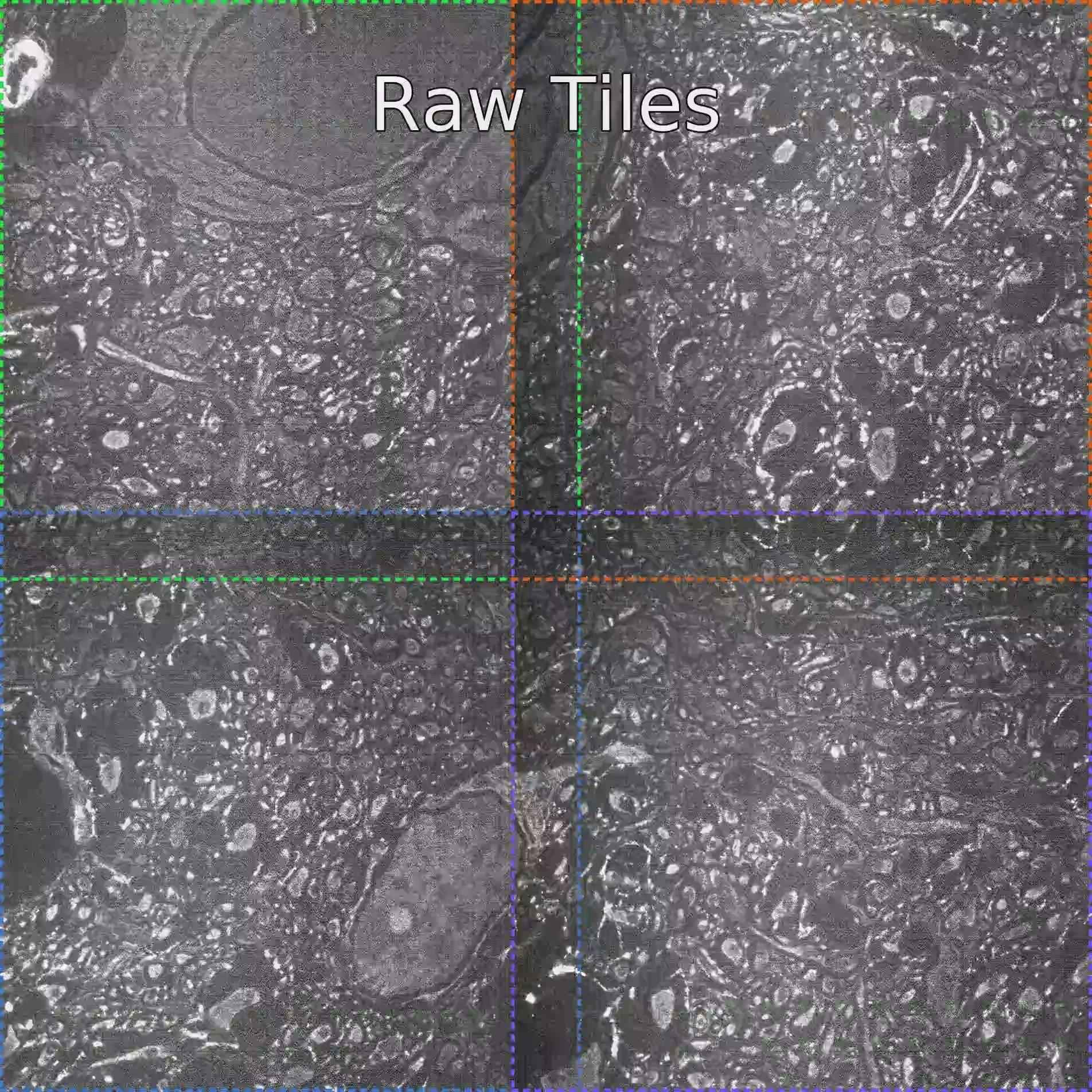
Our standing goal was 3 mm³ of mouse brain at a scalable cost, enough to show a whole mouse is feasible for roughly $20M. We passed it: 3.3 mm³ imaged at synapse resolution, over 3,000× the largest comparable published dataset, from samples 50 to 100× brighter than prior work.
Segmentation runs about 30× faster than the next-best published pipeline, and this quarter we cut the gap to real-time reconstruction from ~80× to ~12× (more on that gap below). Our in-house prototype scope points to a production unit near $10,000, roughly 50× cheaper than the $550K research microscope we use today.
Beyond the mouse, we have expanded and imaged monkey brain tissue, and this quarter received and began expanding the first human brain slice in our SF lab. Imaging it is next.
Predicting activity in cultured neurons
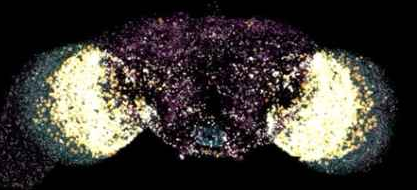
Last year we said we would record neurons firing and learn to predict their activity. This quarter our models reached about 73% accuracy predicting activity in cultured mammalian neurons from held-out data, drawn from more than 700 voltage-imaging recordings.
In the fly, we previously predicted activity directly from the connectome at over 90% (Nature). Doing the same purely from structure in mammalian tissue is the hard problem we are working on now, and early results are promising.
Background · why structure-to-function is the whole game
Scanning gives us the wiring. But a static wiring diagram is not a working brain — the value is in knowing what that wiring computes. If we can predict how neurons fire from structure alone, an emulation follows; if we cannot, a connectome is just a beautiful map.
That is why this number matters more than any other: it is the bridge from "we can image a brain" to "we can run one." The fly proved the bridge exists. Rebuilding it in mammalian tissue is the central scientific bet of the company.
The round
We have opened the Series A. The first $50M scans and uploads the first mouse, the first whole-mammal connectome, and opens a phased plan of about $300M to reach the first human.
We are raising on SAFEs now, about $2M in so far (at a $150M cap), ahead of the priced Series A. Checks are mostly $50 to $250K, with Capital Factory helping on introductions. Behind them, an estimated $15 to $25M of follow-on is waiting for a lead.
The round is gated on that lead. It is the single thing that would let us run at full speed through the most important stretch of Eon's history.
Eon Systems PBC founded
Nature: whole-fly-brain emulation
$3.3M seed, Apr 2025
More brain scanned than the rest of the world combined
~73% activity prediction in cultured neurons
First human brain slice, expanding in SF
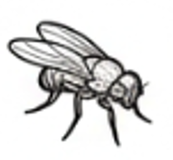
First fly upload, in Nature
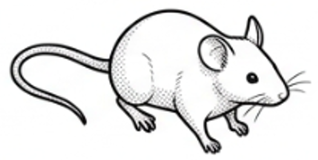
First whole-mammal connectome, scanned and emulated
First research and pharma customers
First AI algorithms unlocked
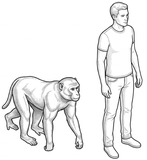
First human connectome (also macaque)
Larger research and pharma subscriptions
Best AI algorithms unlocked
Financials & economics
There is no risk of a cash crunch before the round closes. SAFEs are arriving, and I will personally bridge any gap. Capital in hand now simply means we never slow down.
Marginal cost per upload falls about an order of magnitude per hardware generation, the same curve that took genome sequencing from $100M to under $1,000.
Team
The team nearly doubled to 11 this past year. The caliber of scientist choosing to join, including a co-founder of Neuralink, is one of the clearest signals of where this is headed.

What's next
Our goals for the coming quarter, by workstream.
Structure: start scaling toward the whole mouse.
Move from single cubic millimeters toward the ~500 mm³ of a full mouse brain, and keep driving imaging cost down.
Function: scale the microisland pipeline to sharper structure-to-function predictions.
Keep growing the recordings and pushing prediction accuracy up on the neurons we already run.
Emulation: push the fly toward real-time, and prepare for the mouse.
Speed up the connectome simulation, and stand up the pipeline for a mouse-scale emulation.
The hard parts ahead
We would rather be plain about the biggest unsolved problems. We have a credible path on each, mostly through AI and scale, but none is solved yet.
Real-time segmentation.
We can reconstruct neurons from the raw images, but about 12× slower than data comes off the scope, down from ~80× this quarter. Closing that gap is an engineering and AI problem, and it has to be solved to scan a whole mouse, let alone a human.
Structure to function in mammals.
Predicting activity from wiring alone is about 30% on mammalian tissue today. The whole emulation thesis rides on pushing that up, and it is genuinely hard.
The compute to emulate a human.
Running a whole human brain in real time is on the order of 100 petaFLOPS and dozens of racks. That compute, and its cost curve, has to keep coming down.
Go deeper: the data room
Everything behind this update — the full thesis, the science, the numbers, and the risks — lives in our investor data room, kept continuously up to date. As a current investor you have standing access; it is where to go for the detail under any headline here.
The complete Eon investor room — "The Uploading Company." Open it with your existing investor access, or just reply and we'll send you a link.
Open the data room →How you can help
Two things are on our minds this quarter, and there are four concrete ways you can help.
Introduce us to a lead
The round is gated on a lead investor, with $15 to $25M waiting behind one. Warm intros to deep-tech or frontier-science funds that can lead are the most useful thing right now.
Tell us which framing lands
Most investors we meet are not yet ready for "uploading"; it reads as far off, or too philosophical. The AI-and-algorithms framing is landing better. Your honest read on which story works helps us aim.
Take a practice pitch
We would value 30 minutes to walk you through the deck and get your feedback before major investor meetings.
Amplify our work
Follow and share @eonsys. And warm intros to the people we are hiring, below, are hugely helpful.
Warm intros are gold. What we are looking for:
The fly is done and published. This quarter we showed we can read activity from wiring, and passed the scanning goal we set a year ago. The mouse is next. Thank you for being part of it.
Founder & CEO, Eon Systems PBC